
When weak evidence kills a criminal case
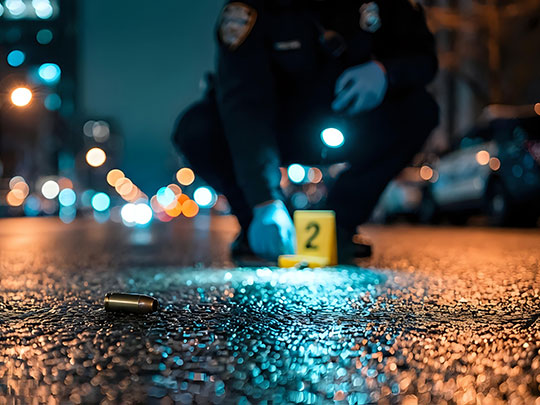
In the U.S. criminal justice system, the burden of proof rests squarely on the prosecution.
To move a case forward and ultimately obtain a conviction, the government must present credible, admissible evidence that proves every element of the alleged offense beyond a reasonable doubt. When this standard isn’t met due to insufficient evidence, the prosecution’s case can be quickly derailed, leading to a dismissal of charges.
Evidence does not need to be nonexistent for a case to collapse. Instead, the evidence may simply be too weak, inconsistent, or unreliable to support the government’s claims.
Courts routinely scrutinize whether a case brought by the prosecution meets the legal standard required to justify criminal charges. If it does not, a judge may determine that continuing the case would be unjustified.
Early in a criminal case, the court routinely examines whether the prosecution has established probable cause: a legal threshold requiring objective facts that reasonably suggest the defendant committed a crime. Without this basic foundation, the charges may never make it to trial.
For defendants, weak evidence can be a powerful defense tool. A knowledgeable criminal defense attorney carefully reviews police reports, witness statements, and physical evidence to identify weaknesses that may justify dismissal or a not-guilty verdict.
When the government’s case is built on speculation, flawed procedures, or unreliable testimony, it may not survive the legal challenges raised by the defense.
WHERE CASES FALL APART
Many criminal cases appear strong at first glance but collapse once the evidence is closely examined. One of the most common weak points is witness credibility.
Witnesses may provide conflicting statements, lack firsthand knowledge, or have motives that undermine their reliability. If a judge or jury finds a witness untrustworthy, the prosecution’s narrative can swiftly unravel.
Another frequent problem involves forensic gaps. Modern criminal cases often rely on physical evidence such as DNA, fingerprints, or digital records. However, when forensic evidence is missing, contaminated, or inconclusive, it can leave critical holes in the prosecution’s case.
Illegal searches also play a major role in cases falling apart. The Fourth Amendment protects individuals from unlawful searches and seizures. If law enforcement collects evidence without proper legal authority — such as conducting a search without probable cause or a valid warrant — the court may exclude that evidence entirely.
When key evidence is excluded or discredited, the prosecution may no longer have enough proof to proceed. At that point, a skilled criminal defense attorney in Orange County can argue that the remaining evidence fails to meet the legal threshold required for prosecution.
STRATEGIC MOTIONS
Defense attorneys can employ powerful legal tools to challenge weak evidence before a case ever reaches trial. Strategic pretrial motions usually play a decisive role in exposing flaws in the prosecution’s case.
One of the most important is the 995 motions process in California. A Penal Code 995 motion asks the court to set aside a criminal complaint when the prosecution cannot demonstrate probable cause or when legal errors occurred during the preliminary hearing. If successful, the judge may dismiss some or all charges before trial.
Another chief strategy involves suppression motions. A motion to suppress requests that the court exclude evidence obtained through constitutional violations such as illegal searches or coerced statements. If the suppressed evidence was central to the prosecution’s arguments, the loss of that evidence may result in the case fully collapsing.
Defense lawyers may also file formal dismissal requests arguing that the available evidence cannot legally support the charges. Judges regularly grant these motions when the prosecution cannot meet the required legal standards.
For individuals facing criminal accusations, early legal guidance can make a major difference. An experienced legal professional specializing in criminal defense can evaluate the strength of the prosecution’s case and determine whether strategic motions could weaken or eliminate the charges.
If you or a loved one is facing criminal charges, speaking with a defense lawyer as soon as possible is vital to protecting your future. Many firms offer a free consultation, allowing you to understand your rights, explore possible defenses, and determine the best strategy to reach a favorable outcome in your case.